the apartment (1960)
reclaiming your moral center
C.C. Baxter has made a habit of bending his life for other people’s comfort. He gives away his apartment, his time, his boundaries, and eventually his self-respect while climbing the corporate ladder. His pliancy is not borne from ambition but rather a desire to be useful and avoid conflict. Ultimately he must take the greatest leadership test: choose between the person he has become and the person he knows he should be.
Leadership Lesson
C.C. Baxter learns that ambition without ethics corrodes the soul. His turning point comes when he stops letting people walk over him and chooses dignity over advancement.
Character Psyche
Baxter’s default setting is to stay agreeable. He’s built his entire identity around being the man who never causes trouble, never says no, and never asks for more than he’s given. That instinct to please isn’t kindness but survival. He believes that if he stays useful, he’ll stay safe. This mindset lets him rationalize the apartment arrangement. He tells himself he’s not hurting anyone, that it’s temporary, that it’s the price of admission in a system where likability is currency. His frustration never leaves his head; he swallows it because speaking up feels dangerous.
Everything shifts when Sheldrake, the Personnel Director, brings Miss Kubelik into the equation. She isn’t just another name on the rotation; she’s someone Baxter genuinely sees, respects, and quietly admires. Baxter convinces himself that Sheldrake values him, mistaking scraps of attention for genuine regard. He believes loyalty creates mutual obligation, that covering for Sheldrake will eventually be repaid in kind. Sheldrake knows better. He understands that loyalty, once given freely, creates dependence, and he uses that imbalance to keep Baxter compliant. Baxter, who equates usefulness with safety, leans into the illusion of being “chosen,” not realizing he’s being managed, not mentored.
When Miss Kubelik collapses in his apartment, the cost of his compliance becomes personal. He can no longer pretend he’s a bystander. The guilt isn’t abstract. It’s tied to someone he cares about, and it shatters the story he’s been telling himself about being harmless. The doctor’s lecture doesn’t teach him anything new; it forces him to confront what he already knew but refused to face. The wall he built around his moral center cracks, and for the first time, he sees the man he’s become. So when Sheldrake asks for the key again, Baxter’s decision is instinctive. He’s not choosing between career and romance. He’s choosing between the version of himself he’s been performing and the version he can live with.
NYC Reality Check
1960’s Manhattan corporate culture is a machine built on hierarchy, image, and quiet corruption. The city rewards ambition but punishes conscience. Baxter’s world is one where everyone knows the rules, but no one says them aloud. The pressure is subtle but constant: go along to get along.
New York becomes the crucible that forces Baxter to confront the gap between who he is and who he’s pretending to be. The city doesn’t change him, it reveals him.
Why It Still Matters
Seemingly simple or isolated choices made without moral grounding will snowball into uncontrollable situations. Baxter’s story is a reminder that leadership isn’t about rising; it’s about refusing to rise at the expense of your values.
Teaching Points
Baxter’s journey shows how easy it is to rationalize unethical behavior when it benefits us. His eventual stand is a reminder that leadership begins the moment we stop enabling dysfunction.
1. Compliance is a decision.
Baxter thinks he’s being swept along by the system, but every “yes” is still a choice. Leaders forget that passivity is an action with consequences.
2. Silence is a form of participation.
Baxter never speaks up, not to his neighbors, not to his bosses, not to himself. Avoiding discomfort is how leaders accidentally endorse the very behavior they resent.
3. Don’t be an enabler.
Sheldrake exploits the pliancy in Baxter’s personality because he knows he can. Giving people what they want trains them to expect access to you — and they never give that power back.
4. Proximity to power is not the same as influence.
Baxter confuses access with agency. Leaders often mistake being “in the room” for having a voice.
5. The easy way creates fall-out.
Drawing hard lines and enforcing them is how leaders prevent collateral damage. Doing what’s right is rarely what’s comfortable.
6. Stand On Your Conviction.
Conviction only matters when it costs you something. Baxter’s resignation is leadership because he finally chooses integrity over approval.

CC Baxter resided at 51 West 69th Street
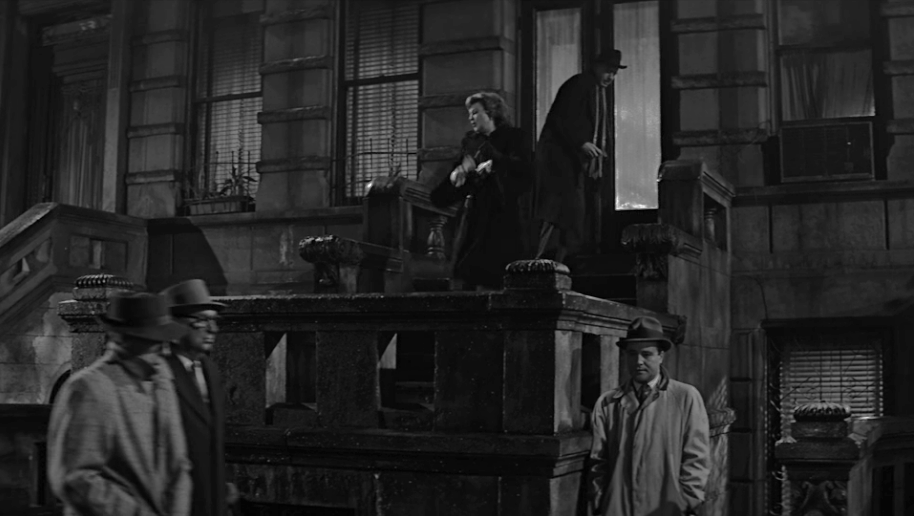
Baxter lurks next to his own stoop as he waits for his apartment to become vacant.